Creating a SharePoint Group
A SharePoint Group can have as many filing locations as you want but all of them must be in the same Document Library, so you will need to create one Group for each Document Library that you use.
Where to create the Group file/s
The configuration of the Group is saved in a file with the extension .exspgroup. Be sure to place the file somewhere that staff can get to it so that they can connect to this Group. If you have confidential Document Libraries, SharePoint's permissions on those will be respected, so you don't need to be concerned about the wrong people having access, but you may not want most staff to even find the Human Resources filing group. So we recommend that you place the group files on your file system where only the right people can find them.
Creating a Group
To create a new SharePoint Group, launch the Location Manager either from the menu in Outlook or from the tray icon.
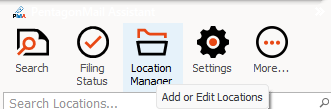
Select New and then SharePoint Group.
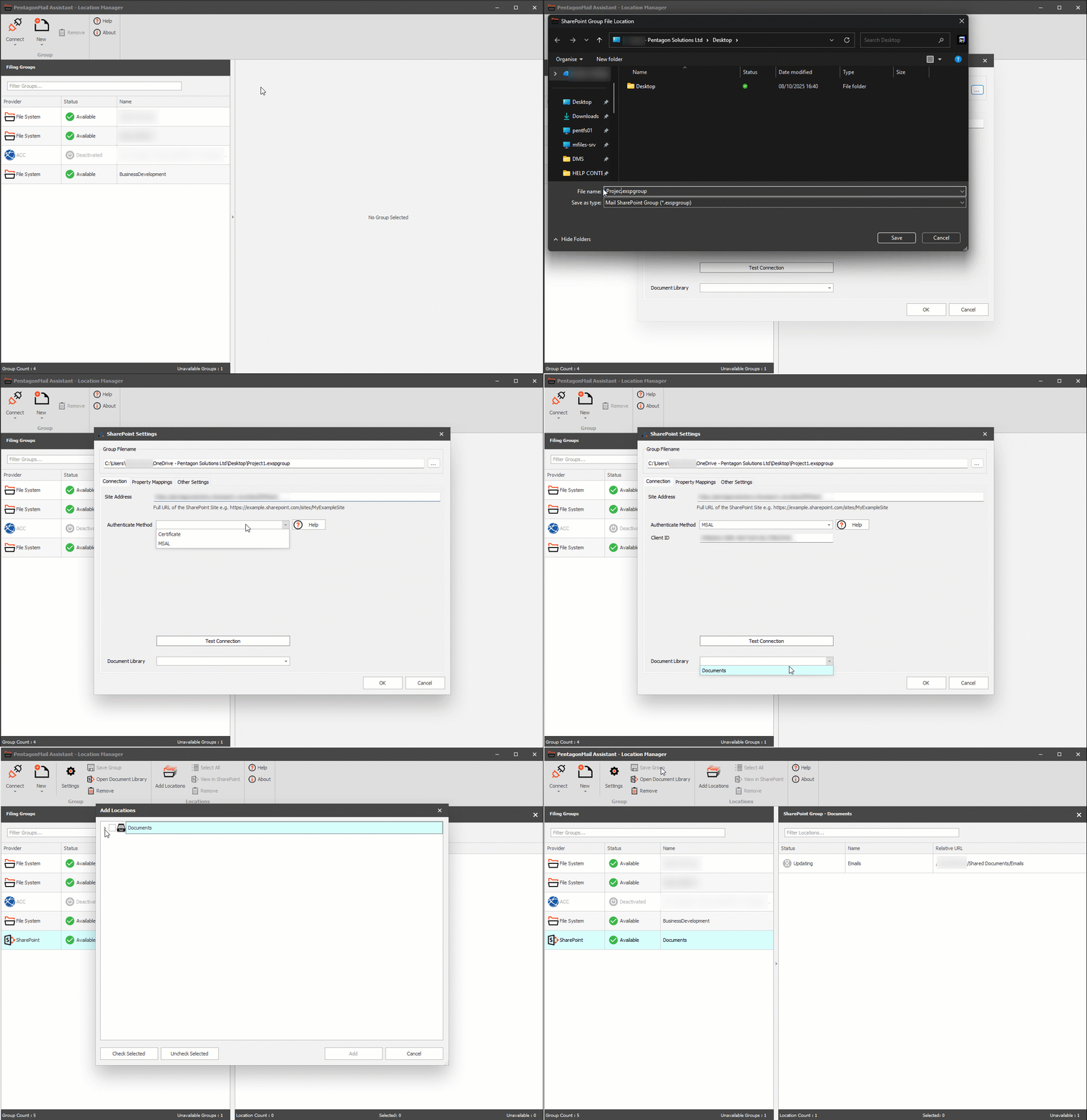
PMA SharePoint Provider now (from version 5.0.237.0 onwards) has the option of two authentication methods: MSAL (Microsoft Authentication Library) and Certificate which are further explained at the bottom of this page.
As shown in the recording below, you will need to provide: the filename and path location for the group file, the internet address of your SharePoint site, and the MSAL or Certificate details.
Note that you have to Test Connection before you can select a document library.
Authentication methods:
MSAL
MSAL uses modern OAuth 2.0 authentication to connect securely to SharePoint using a registered Azure AD application. This method is the simplest to configure and is suitable for most environments.
Required information:
ClientID: The Application (Client) ID of your Azure AD app registration
Certificate
Certificate-based authentication allows secure app-only access to SharePoint without relying on user sign-in. It is ideal for background services, automation, or integrations that need continuous access.
Required information:
Client ID: The Application (Client) ID of your Azure AD app registration.
Certificate Path: The full file path to your .pfx certificate file used to authenticate the app.
Certificate Password: The password protecting your .pfx certificate.
Please check the page SharePoint Online Integration if you are unsure on how to collect the above information from your tenant.